
Padel court construction
Have padel court built?
Allesvoorpadel is a specialist in the design, construction and installation of high-quality padel courts. With over 10 years of experience and hundreds of completed projects, we are the partner of choice for sports clubs, investors, municipalities and recreational parks. From design and foundation to installation and maintenance: we supervise the entire process so that your padel court becomes durable, safe and perfectly playable. Constructing a padel court requires specialist knowledge of sports technology, foundations and materials. A high-quality padel court must be able to be used intensively for years without the playing quality deteriorating. It is therefore important that the construction is carried out by experienced specialists who know which structures, materials and dimensions are needed. Allesvoorpadel supervises the entire process from start to finish. We analyse the location, advise on the right substrate and design a padel court that perfectly suits the needs of your sports club or project. We then take care of the complete installation of the padel court, including foundation, glass construction, lighting and artificial grass.
- Professional groundwork and solid foundation
- Official dimensions according to international standards
- Durable construction with glass and steel
- High-quality artificial grass for optimal playing quality
- Ecological research
- Safety and subsoil
- LED lighting
- Suitable for indoor and outdoor locations
- Choice of padel court models
- Rapid realisation
- Maintenance and service after completion
We are happy to help!
STEP FOR STEP
So we realise your padel court from idea to completion.
Every project starts with an analysis of the site and the project's objectives. Among other things, we look at the available space, substrate, surroundings and future expansion possibilities. Based on this, we develop a design and plan of action for the padel court.
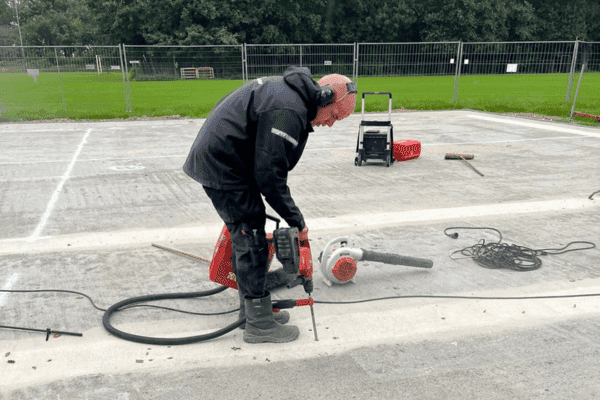
A good foundation is essential for the longevity of a padel court. Our team takes care of all groundwork, including levelling, drainage and concrete foundations. This creates a stable foundation for the construction of the padel court.
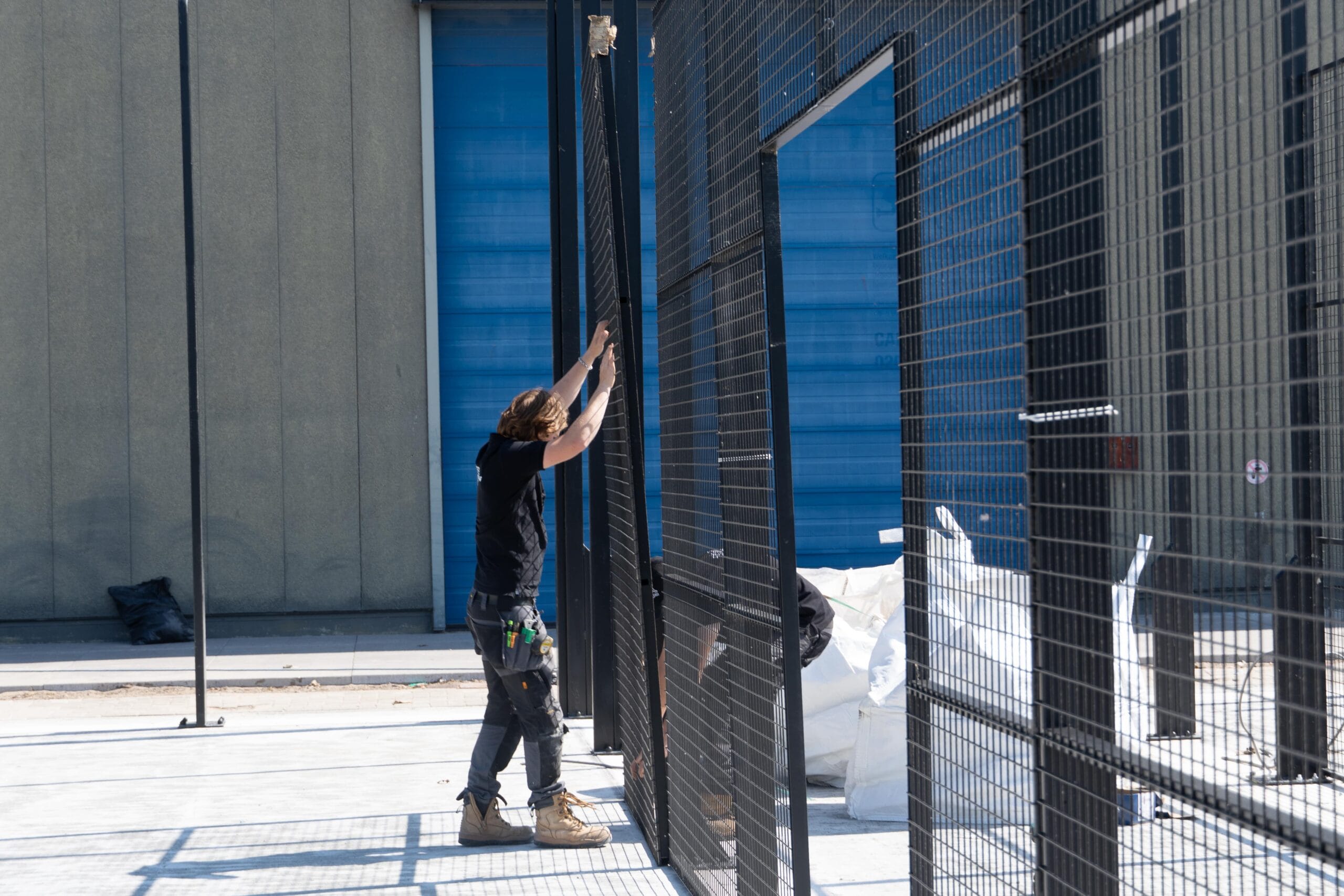
After preparation, the padel court is built. The steel structure, glass walls, net construction, lighting and artificial grass are installed. After an extensive quality check, we deliver the padel court ready for use.
Indoor and outdoor padel courts
Padel courts can be built both indoors and outdoors. Which solution fits best depends on the location and intended use.
Outdoor padel courts
Outdoor padel courts are often installed at sports parks, tennis clubs and recreation sites. In these projects, much attention is paid to foundation, drainage and weather protection.
Indoor padel courts
Indoor padel courts are built in sports halls, factory halls or fitness centres. Indoor courts are independent of weather conditions and can be used all year round.

Have padel court installed price?
Want to realise a professional padel court at your location? Our team supervises the entire process from design to installation.

Total concept for padel courts
Allesvoorpadel offers a complete total concept for padel accommodations. This means that we not only build padel courts, but also support the development of a complete sports project.
For example, we help with:
- Site analysis and design
- Operating advice
- Permit processes
- Construction of several padel courts
- Lighting and infrastructure
- Maintenance and service
This comprehensive approach allows us to guide sports clubs, municipalities and investors in realising successful padel projects.
What is involved in building a padel court?
Constructing a padel court is a specialised process involving several factors. These include the right foundation, a stable surface, drainage and the choice of high-quality materials. In addition, the padel court must meet official dimensions and safety standards so that players can enjoy the game to the full. Aspects such as lighting, noise reduction and integration within an existing sports facility also often play an important role. By working with an experienced specialist like Allesvoorpadel, you can be sure that every part of the project will be done right. Our team analyses the location, advises on the best solutions and ensures a durable padel court that can be used intensively for many years.
WE BUILD, MAINTAIN AND FACILITATE PADEL FUN.
What is the standard size of a padel court?
A standard padel court measures 20 x 10 metres internal. All around, footplates should be taken into account that the padel court standing, so more space is needed. Including walkways and safety zones, we recommend approximately 22 x 14 metres per lane to. If padel courts side by side, combinations can be made in dimensions and so it can also be smaller.
What is the difference between indoor and outdoor padel courts?
One major difference is the treatment of indoor and outdoor padel courts. Indoor courts suffer less than outdoor courts. The tracks also differ in terms of strength, as there are no wind forces indoors, for example. This is why thicker steel is often used for outdoor courts than indoor ones.
Are there different types of padel courts?
There are particularly many different types padel courts. The most common variants are pillar cages, frame cages or panorama cages. Most courses are made of steel, but partly aluminium is also possible. Each supplier uses different thicknesses of steel, different types of mesh and lighting poles. In the Netherlands, it is important to use an approved cage that is on the sports product list. At Allesvoorpadel are available and you can contact them there for which type of padel court best suits your wants and needs.
Is an operating budget or business plan available for padel courts?
Yes, we also guide clubs and investors in the start-up phase with profitability calculations, operating models and club management advice.
What surface is needed for a padel court?
For indoor padel courts requires a flat surface according to NOC*NSF standards and, in addition, it must be possible to mount in this surface. For outdoor locations, it is important that water can drain away. A water-permeable sports floor is therefore needed and for padel it is recommended that this is a bonded sports floor, e.g. Supersub or ZOAB.
How long does a padel court last on average?What is the lifespan of a padel court?
The padel court has several components. The construction should be at least 20 years come along, but artificial grass, for example, often needs replacing after 5 to 8 years. The surface itself should be able to last up to 40 years and the lighting, on the other hand, will need replacing after 10 years. Obviously for longevity, daily and specialist maintenance is important. Please contact Allesvoorpadel for advice.
What is the cost of a padel court?
The cost vary enormous for indoor and outdoor projects. For complete projects, indoor can count between €30,000 and €45,000 per track and outdoor can count between €70,000 and €95,000 per padel court. If there is a poor subsoil with peat, for example, then the cost of the foundation can increase. Need advice on this? Please contact Allesvoorpadel.
Do I need a permit to build padel courts?
Yes, an environmental permit is usually required. We support in the permit process and advise on the requirements in your municipality. From an acoustic survey to filing a BOPA, we can support and arrange it. Find out more via the following link: https://allesvoorpadel.nl/vergunning-padelbaan/?gad_source=1&gad_campaignid=22137919675&gbraid=0AAAAACQIgeSlWVPCY6cGJqtWMQhLW6-BI&gclid=CjwKCAjwiY_GBhBEEiwAFaghvk1Wp6nNItX4j-0hE449Sk5eeo-pLJboyEJR0mRUj15off2FFe4a0xoC-l4QAvD_BwE
How long does it take to build a padel court?
Construction time depends entirely on the project. For example, for indoor locations, this is often faster because the substrate is already concrete and immediately the padel court can be mounted. For indoor locations where the surface is knockable, any padel court be realised in 3 to 4 working days.
For outdoor locations, it is a different story because the subgrade often still needs to be realised. In addition, the construction time depends on the number of padel courts. On average, an outdoor project takes between 8 and 12 weeks to complete.
What permits are they required to build a padel court?
First of all, it is important that the site is zoned "Sports". If this is not the case, a BOPA will first have to be filed to change the zoning. This process will soon take six months. Should the zoning be good, the process after filing with the municipality is often 8 weeks after which it is often extended by another 6 weeks. Then there is another 6-week objection period during which local residents can file objections. So if everything goes well, the process will soon take 20 weeks.
Then, of course, there is the preparation to file the environmental permit. This varies enormously by association or commercial provider how long it takes to prepare. This can be 4 to 20 weeks. So what needs to be organised? Think about: Drawing work, acoustic research, archaeological research, flora and fauna research, probing, construction calculations et cetera.
For outdoor locations, it is a different story because the subgrade often still needs to be realised. In addition, the construction time depends on the number of padel courts. On average, an outdoor project takes between 8 and 12 weeks to complete.
What are the requirements for lighting on the padel court?
The KNLTB has standards: for official matches minimum approx. 300 lux, in some cases 500 lux for better playing experience, with good evenness of at least 0.70. From Allesvoorpadel we recommend not skimping on lighting as it affects the gaming experience.
Then, of course, there is the preparation to file the environmental permit. This varies enormously by association or commercial provider how long it takes to prepare. This can be 4 to 20 weeks. So what needs to be organised? Think about: Drawing work, acoustic research, archaeological research, flora and fauna research, probing, construction calculations et cetera.
For outdoor locations, it is a different story because the subgrade often still needs to be realised. In addition, the construction time depends on the number of padel courts. On average, an outdoor project takes between 8 and 12 weeks to complete.
How high does a hall need to be indoors to play padel?
The minimum height from the KNLTB is 6 metres for league and tournament play. If a gable roof is present, the height at the end may be 5 metres. From Allesvoorpadel we recommend a minimum height of 7 metres in the middle of the court for an existing hall. Should you erect a newly built hall, the rule applies, the higher the better but at least 8 metres.
Are there solutions to noise pollution at padel courts?
There are several solutions to noise pollution. The most common variants are noise walls and canopies. Depending on the situation, it can be decided which is better and fits in with the environment. Both options are not cheap, but a canopy obviously ensures that play can take place every day.
Can an existing tennis court be converted to padel?
You certainly can. There are different types of tennis courts and each has its own approach to conversion. Think gravel, artificial grass, smashcourt and mateco tennis courts. Want advice on how best to convert at your place? Get in touch with Allesvoorpadel.
How can the hall get less reverberation indoors for padel?
In the padel courts is natural artificial grass, which already dampens sound. Around the courts, you can lay different types of materials. But artificial grass would provide extra damping instead of carpet. In addition, you can apply acoustic curtains on site, see more information here: https://allesvoorpadel.nl/akoestische-gordijnen/
How many padel courts fit on a tennis court?
This depends on the size of the tennis block. Only 1 tennis court can accommodate 1 padel court, but with already a bit more space around it, 2 or perhaps 3 padel courts are also possible. A tennis block of 2 courts can always accommodate 4 padel courts.
What are safety standards for padel courts?
Safety standards are set by NOC*NSF. These are made to prevent, for example, glass breaking quickly or finger entrapment.


