Padel court costs
What does it cost to build a padel court?
Padel is growing rapidly in the Netherlands and more and more sports clubs, municipalities and commercial providers are investing in new courts. But what exactly does a padel court cost? The final price depends on several technical choices, such as indoor or outdoor, construction type, artificial grass, lighting and the groundwork required.
The average cost of a complete padel court in 2026 will be between €29.000 and €35.000 for an indoor padel court and between €75,000 and €95,000 for an outdoor padel court. These prices are based on a turnkey project including construction, glass, artificial grass, lighting and installation. The final investment depends on the chosen specifications, the location and any additional work such as foundations, drainage and groundworks.
If you wish to purchase only the frame structure, including glass and installation, the costs will be considerably lower. Depending on the type of court and the specifications, you should expect an investment of between €20,000 and €33,000 per court. Artificial turf, lighting, foundations and other works can then be added as required. On this page, you’ll find a complete overview of all cost items, a sample calculation of the payback period and information on subsidy options.
Key factors determining price
- Choice between indoor or outdoor padel court
- Type of cage construction (pillar cage or panorama)
- Material and finishing of steel and glass
- Substructure and foundation
- Artificial turf choice and playing characteristics
- Lighting (point or line lighting)
- Drainage and drainage at outdoor courts
- Accessories such as scoreboards and ball traps
- Personalisation options such as logos in artificial grass
- Assembly costs and on-site logistics
- Testing and certification (e.g. KIWA)
- Long-term maintenance and inspection
We are happy to help!

STEP FOR STEP
This is how we map out the cost of your padel court project.
We start with an assessment of the site and its intended use. Here, we look at indoor/outdoor possibilities, space, substrate and required facilities.
We then clarify which cost items apply: construction, artificial grass, lighting, groundwork and any additional options.
You will receive a transparent customised quotation. We then supervise the process from preparation to construction and delivery, including maintenance advice.
The prices quoted are indicative and include delivery and installation, but exclude groundworks, lighting and artificial grass. Every project is unique; please request a bespoke quote for an exact price.
Cage construction as largest investment
The court enclosure is one of the biggest investments in a padel court project. Depending on the type of court, the finish and the construction, the cost of a court enclosure, including glass and installation, averages between €20,000 and €33,000 per job. Panorama models offer a modern look and maximum visibility for players and spectators, whilst pillar cages are known for their robust build and excellent value for money.
Artificial turf and lighting
The choice of artificial grass determines not only the quality of play, but also the lifespan of the court. Allesvoorpadel supplies high-quality systems from, among others Mondo, Grass Partners and Condor. On average, costs are between €26 and €35 per m², depending on the type of artificial grass, fibre structure and colour.
Lighting is essential for padel courts that are also used in the evening. Different lighting systems can be chosen here.
Point lighting including installation: on average between €2,500 and €4,900
Line lighting: on average between €5,000 and €8,000
Earthworks and lighting
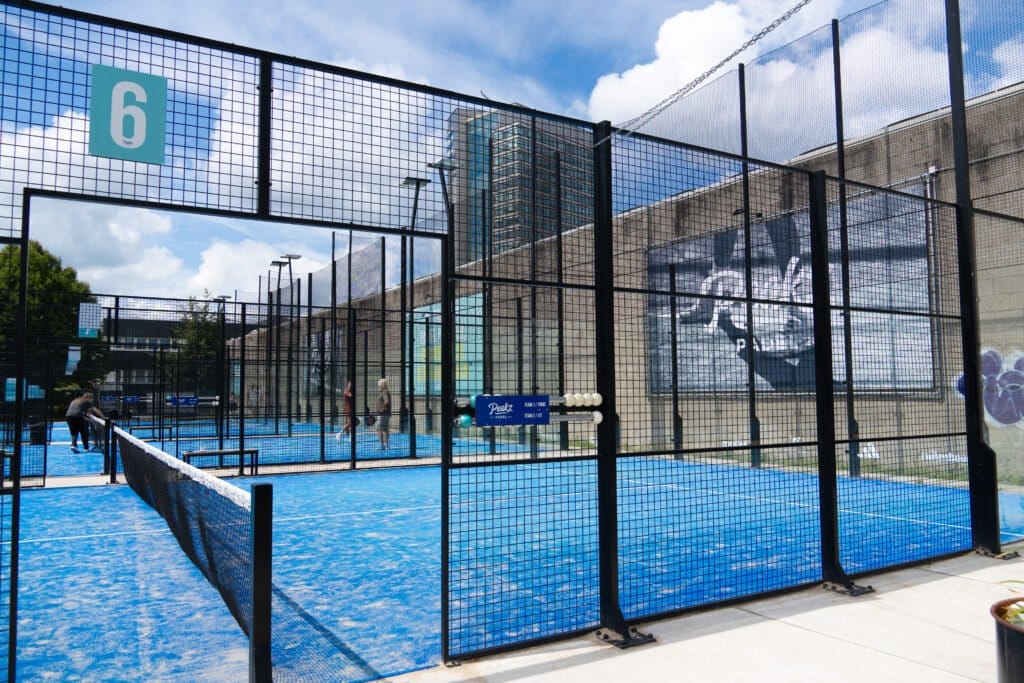
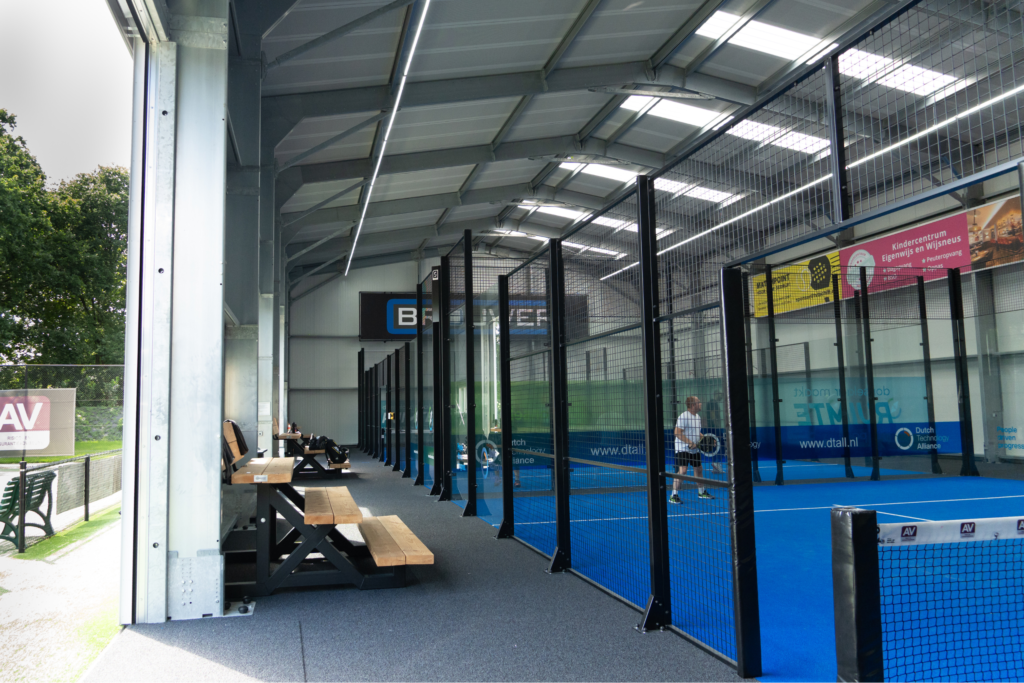
At outdoor padel courts groundwork is a crucial factor within the project. This includes foundations, drainage and the application of sand layers for a stable and permeable substructure. The costs of this strongly depend on the location, soil conditions and accessibility of the site. Therefore, a site survey is almost always carried out first. At indoor padel courts groundwork is often not necessary, making these projects usually more economical. However, sufficient height in the hall is important: at least 6.5 metres free height, where 8 metres preferred for optimal playing comfort.
The total investment in a padel court depends on several factors such as location, surface, type of cage and lighting.
Indoor padel court: on average between €29,000 and €35,000 per job
Outdoor padel court: on average between €75,000 and €95,000 per job
As every project is unique, Allesvoorpadel always draws up a project-specific quotation based on the location, requirements and technical possibilities.
The costs for groundworks and foundations vary considerably from site to site and depend on factors such as soil conditions, site accessibility, drainage and the desired lifespan of the court. For this reason, we do not use standard prices for this part of the project. Together, we assess the situation on site and recommend the most logical and cost-effective solution. For outdoor padel courts, we generally use two types of foundation: a reinforced concrete ring foundation or a concrete slab foundation. A concrete slab foundation can be a good option for temporary or relocatable sites, as the slabs are reusable and retain their value. Read more on our page about padel court foundations.
Padel court costs calculation
Receive a transparent quote tailored to your project.
Subsoil, groundwork and indoor vs outdoor
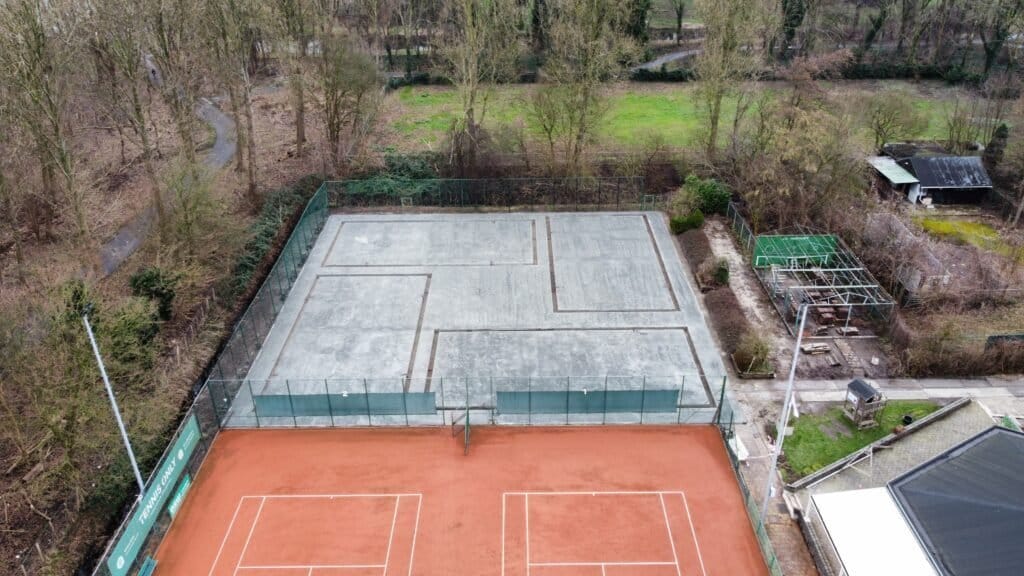
When it comes to outdoor padel courts, groundwork a crucial factor. Consider the foundations, drainage and layers of sand to ensure a stable and water-permeable sub-base. The costs involved depend heavily on the site and require a site survey.
Indoor padel courts are often more economical as groundwork is usually not required. However, height requirements apply: at least 6.5 metres clearance height, preferably 8 metres. Indoor courts start on average from €32,500, outdoor projects are usually between €65,000 and €95,000.
Converting a tennis court into a padel court: making smart use of existing infrastructure
Many clubs choose to to build padel courts on the site of the existing tennis courts. This is often an efficient solution because some of the infrastructure is already in place. This includes surfacing, cables, pipes and existing connections for lighting. As a result, preparatory work can be kept to a minimum and the construction process is often completed more quickly. One tennis court can accommodate one padel court. A block of two tennis courts can usually accommodate four padel courts.
How much does it cost to cover a padel court?
With a roof, outdoor courts can be used almost all year round. This increases the utilisation rate and means the investment can be recouped more quickly. Allesvoorpadel offers a range of roofing solutions for both individual courts and complete padel facilities. The final investment depends on the type of structure, the dimensions and the location. We always provide a bespoke quote to ensure the right solution for your needs.
Permits and investigations
When constructing a padel court, additional permits and assessments may be required. The steps involved vary depending on the local authority and location. Depending on the situation, these may include an environmental permit, an acoustic assessment, structural calculations or additional planning justification.
As each local authority has its own procedures and conditions, we always carry out a project-specific assessment. Allesvoorpadel guides you through the entire planning permission process, from the initial feasibility check to the final application.
The process of applying for planning permission for a padel court can vary significantly from one local authority to another. This is precisely why it is important to follow the regulations carefully and carry out the necessary investigations at an early stage. Thanks to our experience in designing, building and maintaining padel courts, we know exactly what documentation is required and what steps need to be taken to ensure the planning permission process runs smoothly. We support clubs, local authorities and entrepreneurs from the initial site assessment right through to the completion of the application.
Maintenance costs for a padel court
With proper maintenance, a padel court will last an average of 10 to 15 years. Regular maintenance prevents wear and tear, keeps the court safe and ensures that the artificial grass, glass and structure remain in optimal condition. Our specialists clean the glass structure using osmosis water, treat the artificial grass in accordance with a professional maintenance programme and inspect the entire court for wear and tear and safety.
All findings are recorded in the AVP Service app, so that you always have an up-to-date inspection report.
Grants and funding
There are various grant schemes and funding options available to sports clubs that can help with the investment in a padel court. The best-known scheme is the BOSA grant for non-profit sports clubs. In addition, there are various financing and leasing arrangements available that allow the investment to be spread over several years. Our specialists will be happy to advise you on the options that best suit your situation.
Frequently asked questions about padel court costs
What does a complete padel court cost on average?
The total investment in a padel court depends on several factors such as location, surface, type of cage and lighting.
Indoor padel court: average between €29,000 and €35,000 per court
Outdoor padel court: average between €75,000 and €95,000 per court
Which cost is the largest?
The cage construction is usually the biggest investment. On average, it is between €20,000 and €33,000 including installation, depending on type and finish.
Are earthworks costs always necessary?
With outdoor courts almost always, as foundation and drainage are essential. Indoor courts usually do not need groundwork, which can save costs.
Can Allesvoorpadel provide a complete customised quote?
Yes, we make a transparent quote per item and guide you through choices in construction, artificial grass, lighting and additional options.


